
2026 Election Threats
Protect Our Elections
Defending accessible, secure, and fair elections. Respect for the rule of law and reliable governmental processes are among America's greatest competitive advantages.
Here's what business leaders need to know — and what you can do.
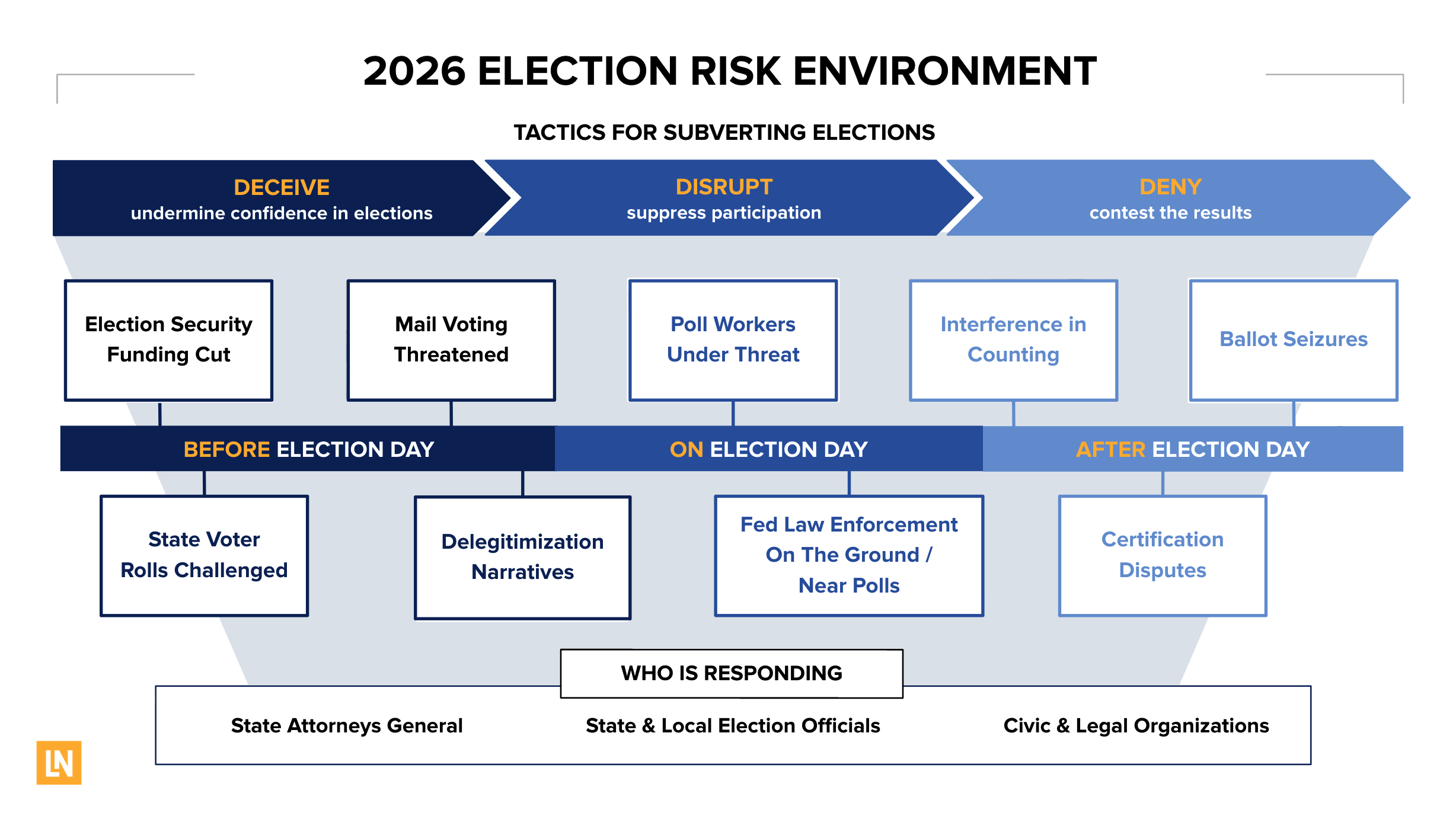
The 2026 midterm elections will take place in a significantly altered risk environment.
Why Election Integrity Is a Business Priority
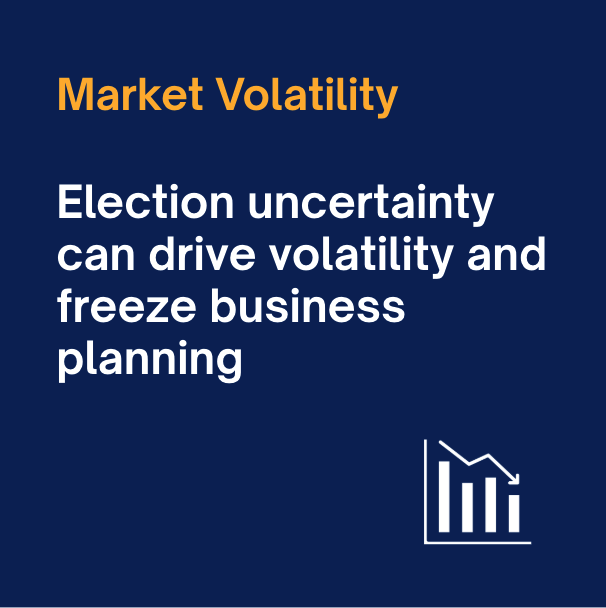
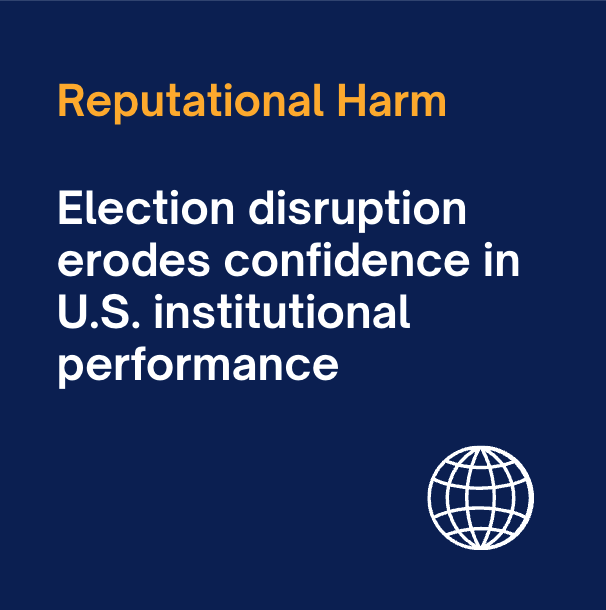
Election uncertainty isn't just a political issue — it's an economic risk.
How U.S. Elections Are Kept Safe and Secure
Explainer: How Every State Protects Your Vote
American elections are administered across 10,000+ local jurisdictions. Bipartisan oversight and multiple layers of security, reconciliation, and audits throughout the process make U.S. elections safe, secure, and accurate.
96% of voters use a ballot with paper verification · 49 states conduct post-election audits · 44 states verify the identity of mail-in ballot users · Every state has legal processes for candidates to challenge results and request recounts · Every state allows poll watchers from the public
The Bipartisan Policy Center, in collaboration with the R Street Institute and the Institute for Responsive Government, details these protections.
Read: United in Security — How Every State Protects Your Vote (2026) →
Why 2026 Is Different
Election Day
Voter access & administrative risk
Federal efforts to obtain voter data could lead to erroneous removals, administrative overload, and litigation that disrupts election preparation. Ongoing challenges to mail-in voting and electronic voting machines — contradicting elections experts and administrators of both parties — create confusion and lay the groundwork for contesting results. Heightened federal law enforcement activity in targeted jurisdictions could deter voter registration, canvassing, and public campaign events.
Election Day
Operational & public-safety risk
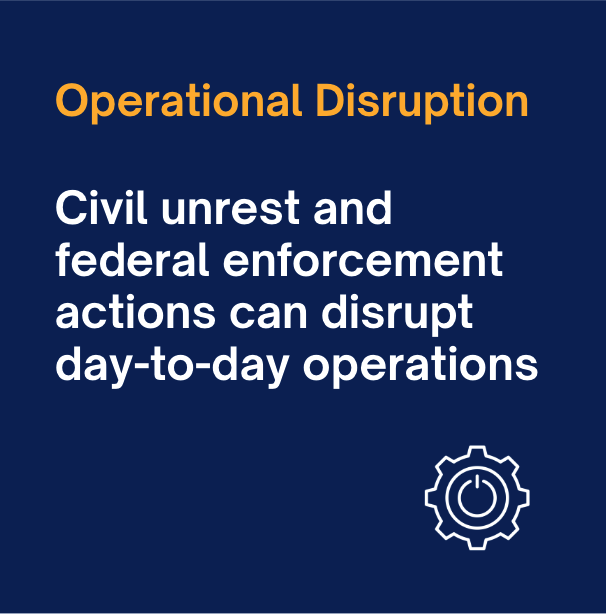
Federal law enforcement deployments near polling places or election offices could suppress turnout or disrupt operations, whether intentional or not. Election officials and poll workers face escalating threats and harassment, increasing the risk of staffing shortages and operational errors on the day that matters most.
Election Day
Counting & certification risk
Claims of irregularities could be used to justify seizure of ballots or machines, unwarranted federal investigations during vote counting, or political pressure on state and local officials — disrupting the “best practice” ballot chain of custody needed to ensure accurate results. In a close election, certification disputes in even a small number of districts could delay or prevent the seating of duly elected members of Congress on January 3, 2027.
Legislation to Watch
Understanding the SAVE America Act
Citizenship is already required to vote, and noncitizen voting is virtually nonexistent. The Bipartisan Policy Center breaks down what this legislation would do and how it would harm participation without commensurate improvements in security.
Practical Steps for Business Leaders
Business leaders can take action to reduce systemic risk.
-
1
Engage early with state and local election officials
Proactively reach out to the secretary of state's office or county elections clerk to express support for their efforts to run accessible, secure and fair elections. Ask them how you and the business community more generally can be supportive of their efforts.
-
2
Support election operations and civic norms
Encourage employees to register to vote and to serve as poll workers, and make it as simple as possible for them to do so. Consider best corporate practices to facilitate participation like paid time off. Host programs aimed at enhancing civic engagement of employees. The Wisconsin Business Leaders for Democracy share best practices.
-
3
Share primers on how elections work in the U.S.
The bipartisan oversight and the layers of security, reconciliation, and audits throughout the process make U.S. elections safe, secure and accurate. When people understand how elections, vote-tabulation and results certification work, they become advocates in their own circles. Educating Americans of all stripes and helping them grow trust in our country's elections is a powerful antidote to disinformation and distrust.
-
4
Plan for post-election uncertainty
Engage proactively, in advance of the elections, with other business leaders and business associations (including chambers of commerce) to discuss when collective business leader action, either public or private, would be warranted. Make a specific plan for what that would look like, including which influential decision-makers could be engaged and when public statements would be warranted.
-
5
Prepare messaging and be ready to act
Prepare internal and external messaging that emphasizes patience, respect for election processes, and trust in local and state election officials during vote counting and certification. Be ready for coordinated business leader action, should the need arise, including private outreach or public statements, based on pre-identified criteria and in consultation with peers and relevant stakeholders.
See It in Action
How Business Leaders Are Protecting Elections
Leadership Now members and business leaders across the country are promoting trust in our elections. Here's what that looks like in practice.
Resources
Civic Alliance →
Best practices for corporate civic engagement and employee participation
Bipartisan Policy Center →
Resources to learn more about the people, processes, and safeguards that make U.S. elections safe, secure, and accurate
Brennan Center for Justice →
Conducts research and proposes reforms on voting, courts, money in politics, and democratic institutions
Campaign Legal Center →
Litigates and advances policy to enforce campaign finance, voting rights, and government ethics laws
Democracy Defense Project→
Bipartisan coalition of former elected officials working across key states to defend election administration, support officials, and counter efforts to undermine lawful election processes and outcomes
Democracy Forward →
Litigates to challenge unlawful government action and protect democratic norms and administrative law safeguards
Protect Democracy →
Litigates and develops institutional reforms to prevent abuses of power and election subversion
States United Democracy Center →
Supports state and local officials with legal guidance, research, and defense against election interference and intimidation
Lawyers' Committee for Civil Rights Under Law →
Runs nationwide voter-assistance hotlines and litigates to protect ballot access and election administration